
Godawari & Phulchauki Day Birding
A one-day naturalist-led bird walk on the southern edge of the Kathmandu Valley — Godawari Community Forest at the base, with an optional second day climbing Phulchauki Hill (2,760 m). Subtropical and temperate forest; over 300 species recorded on the hill, 100+ logged on past single days. Max-8 group, led by a licensed birder. Sunday–Friday departures.
About this trek
Godawari sits at the foot of Phulchauki, the highest hill ringing the Kathmandu Valley at 2,760 m. The Community Forest and the adjacent Royal Botanical Garden hold subtropical and temperate broadleaf habitat within a 45-minute drive of the city — a working day-trip for valley-based birders.
The standard day covers five to six hours along the forest roads and trails at Godawari, scanning the mid-storey and canopy for mixed feeding flocks. A two-day option adds Phulchauki's upper section: rocky tracks through cooler forest where Himalayan Cutia (Cutia nipalensis) and Blue-naped Pitta (Hydrornis nipalensis) become possible, alongside laughingthrushes, barwings, and woodpeckers.
Past one-day trips have logged 100+ species; the hill carries records of over 300. Sightings depend on season, weather, and flock movement — we do not promise individual species. The group is capped at 8, and departures run Sunday through Friday, since the Botanical Garden is busiest on Saturday and birding works better when the forest is quiet.
Trip Facts
- Best season
- October–April (estimated — operator to confirm)
- Group size
- 2–8 trekkers
- Total distance
- ~8 km
- Start / end
- Kathmandu → Kathmandu (~45 min transfer → Godawari)
- Guides & porters
- English-speaking naturalist birding guide (day tour, no porters)
- Minimum age
- 12+
Trek Highlights
- Himalayan Cutia (Cutia nipalensis) — temperate-forest specialist of the upper hill
- Blue-naped Pitta (Hydrornis nipalensis) — secretive understorey skulker on Phulchauki
- Chestnut-headed Tesia (Cettia castaneocoronata) and Hoary-throated Barwing (Sibia nipalensis) in mixed flocks
- Bay-backed (Dendrocopos nanus) and Darjeeling (Dendrocopos darjellensis) Woodpeckers along the forest road
- Subtropical-to-temperate forest transition within a single day's walk
- 100+ species recorded on past single-day visits; the site list exceeds 300
Day-by-Day Itinerary
An early road transfer (~45 min) to Godawari, then five to six hours of birding along forest roads and trails in the Community Forest and Royal Botanical Garden, scanning mid-storey and canopy for mixed feeding flocks. Return to Kathmandu by late afternoon.
Book a Departure
No published departures right now — get in touch and we'll set up a private date.
Upcoming Departures
Year-round
1 departureCustom and private departures available year-round on request.
What's Included
- Private transport from and to Kathmandu
- Licensed naturalist birding guide
- Community forest and Botanical Garden entrance fees
Not Included
- Food and drinks
- Personal expenses and tips
- Anything not listed under "What's Included"
Frequently Asked Questions
How many species will I see?
Past single-day trips at Godawari have logged 100+ species, and the cumulative site list exceeds 300. Your day depends on season, weather, and flock activity — we do not guarantee any individual species.
Is this suitable for a first-time birder?
Yes, for day 1. The forest is accessible, the pace is slow, and the guide names every bird that calls. The Phulchauki upper-section day is better with some birding experience, because target species are harder to find.
Why no Saturday departures?
Saturday is the Nepali weekend and the Botanical Garden fills with day-trippers. Birding works better when the forest is quiet, so we run Sunday through Friday.
Can I see Himalayan Cutia or Blue-naped Pitta on day 1?
Both species are realistic only on the Phulchauki upper section (the 2-day option). Day 1 at Godawari focuses on mid-elevation species.
What other birds might turn up?
Mixed flocks regularly hold Striated Laughingthrush, Rufous-chinned and Dark-sided Laughingthrushes, Rusty-fronted Barwing, Common Green Magpie, Scarlet Minivet, Blue-bearded Bee-eater, and Rufous-bellied Niltava. Himalayan Vulture and (in migration) Booted Eagle soar along the ridge.
How fit do I need to be?
Day 1 is easy — graded forest roads and short trails, suitable from age 12. The optional Phulchauki day involves rocky tracks and a sustained climb to 2,760 m, so moderate fitness is required for that section.
More treks like this

Bird and Red Panda Expedition — Eastern Nepal
A 16-day expedition through four eastern-Nepal habitats — Phulchowki above Kathmandu, Sindhuli Gadi, the Koshi Tappu wetland, and the Ilam hills — tracking red panda (Ailurus fulgens, IUCN Endangered) alongside resident and migratory birds including Sultan Tit (Melanochlora sultanea). Naturalist-led, small group, starts and ends in Kathmandu. Red panda sightings are not guaranteed.
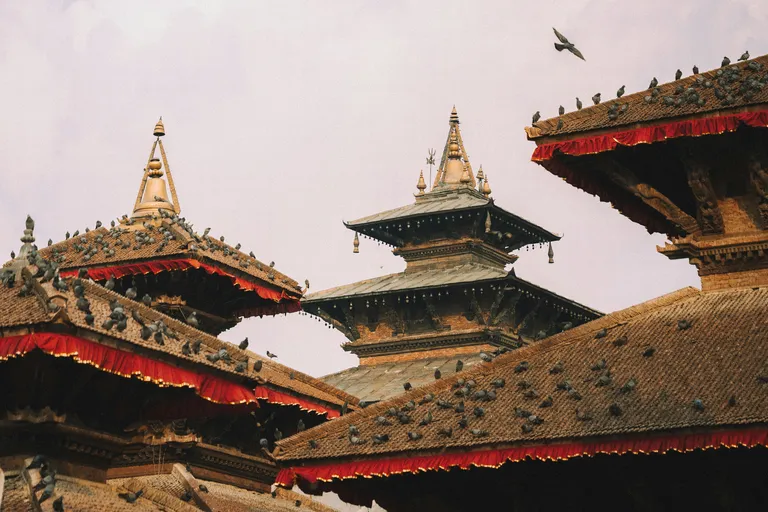
Urban Birds of Kathmandu Valley
Urban Birds of Kathmandu is a flexible half-day to multi-day birding outing run inside the valley — forest edges, farmland, creeks, and scrub slopes 15–40 minutes from the city. Targets include the Spiny Babbler (Turdoides nipalensis), the only bird endemic to Nepal. Naturalist-led, with a post-trip checklist, using the Kathmandu-based bird guides we work with year-round.
Haibung Bird Trek
A 3-day birding trip from Kathmandu to Haibung, on the northern edge of Shivapuri Nagarjun National Park. The mid-hill broadleaf forest holds Spiny Babbler (Turdoides nipalensis) — Nepal's only endemic bird — alongside Fire-tailed Sunbird and a dozen other target species. Small group, naturalist-led, based at one local lodge with morning and afternoon forest walks.