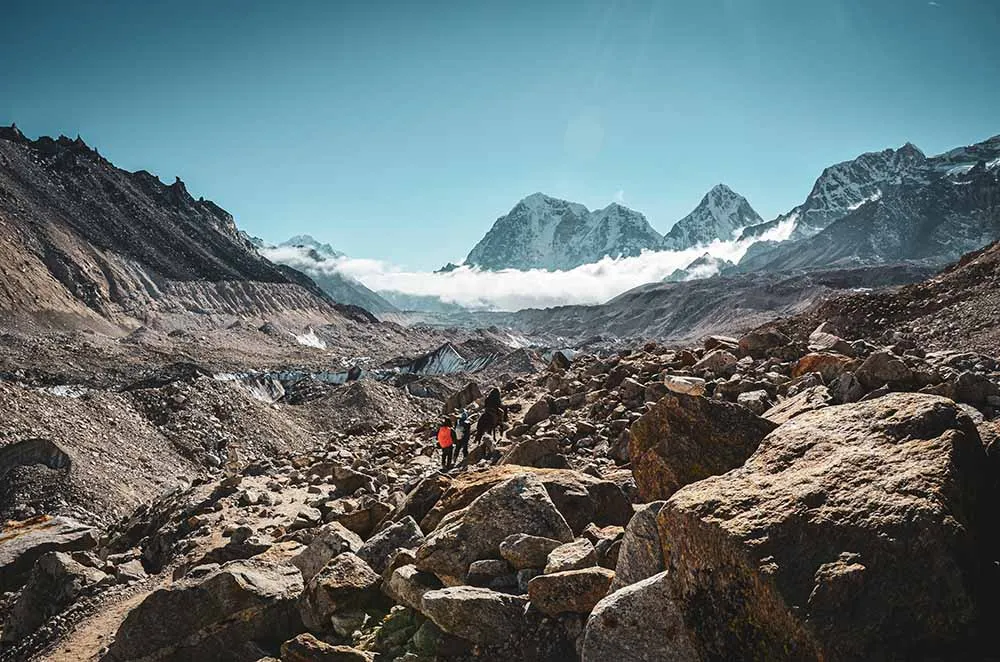
Everest Base Camp Trek
Walk to the foot of the world's highest mountain on Nepal's most iconic trail. Over 17 days, you'll cross suspension bridges above the Dudh Koshi, sleep in Sherpa teahouses, watch Ama Dablam catch the morning light from Tengboche, and stand at 5,364 m on the Khumbu Glacier — Everest Base Camp itself. Guided by local Sherpa-trained leaders, with full acclimatisation built in.
About this trek
In the world of adventure, no name carries more weight than Everest. The highest peak on Earth at 8,848 m (29,029 ft) is the benchmark for human ambition — and standing at its foot is a milestone that doesn't ask you to be a mountaineer, only to walk well, breathe carefully, and look up often. Reaching Everest Base Camp is one of the great pilgrimages of modern travel.
The classic route follows the trail Edmund Hillary and Tenzing Norgay took to their 1953 first ascent. Starting with a short, dramatic flight into Lukla — a runway carved into the side of a hill — you'll spend close to two weeks walking up the Khumbu Valley through the heart of Sherpa country. Forests of rhododendron and blue pine give way to alpine meadows and finally to the moraine of the Khumbu Glacier. Along the way you'll cross the high suspension bridges strung with prayer flags, drink butter tea in family-run teahouses, and watch sunlight move across Ama Dablam, Lhotse, and Everest itself from the courtyard of Tengboche Monastery.
This is a teahouse trek — meaning you'll sleep in simple, family-run mountain lodges every night, with all meals included. Two full acclimatisation days are built into the route at Namche Bazaar and Dingboche, which is what allows trekkers in good general fitness (no mountaineering experience required) to safely reach 5,545 m at Kala Patthar — the viewpoint that gives you the closest, most direct face-to-face look at Everest itself. We've been running this trek out of Kathmandu since 2008, and our guides are all Khumbu-region Sherpas who know the trail, the weather, and the village families along it personally.
Trip Facts
- Best season
- March–May (spring) and September–November (autumn)
- Group size
- 2–12 trekkers
- Total distance
- ~130 km
- Avg walking
- 5–7 hours
- Start / end
- Lukla (35-min flight from Kathmandu)
- Accommodation
- 3 nights tourist hotel in Kathmandu (twin-share, B&B); 13 nights in mountain teahouses (twin-share, all meals)
- Guides & porters
- Licensed Sherpa guide, plus 1 porter per 2 trekkers
- Minimum age
- 16+
Trek Highlights
- Stand at Everest Base Camp at 5,364 m (17,598 ft) on the Khumbu Glacier — the literal foot of the world's highest mountain
- Watch sunrise from Kala Patthar (5,545 m), the viewpoint that gives you the closest unobstructed view of Everest's summit pyramid
- Spend two nights in Namche Bazaar, the Sherpa capital, with a proper acclimatisation day to explore monasteries, the Sherpa Museum, and the Everest View Hotel
- Visit Tengboche Monastery, the spiritual heart of the Khumbu and home to the largest Tibetan Buddhist community in the region
- Sleep in traditional Sherpa teahouses every night of the trek — wood stoves, shared dining halls, dal bhat, and the kind of mountain hospitality that's been welcoming trekkers for fifty years
Day-by-Day Itinerary
You'll be met at Tribhuvan International Airport and transferred to your hotel in Thamel, Kathmandu's traveller quarter. Get settled, take a hot shower, and meet your guide at the welcome dinner — a chance to go through the route, check gear, and ask everything you wanted to ask. Accommodation: 3-star hotel in Kathmandu. Meals: Dinner.
Book a Departure
No published departures right now — get in touch and we'll set up a private date.
Upcoming Departures
Custom and private departures available year-round on request.
What's Included
- 3 nights' accommodation at a 3-star tourist hotel in Kathmandu (twin-share, B&B)
- 13 nights' accommodation in mountain teahouses on the trek (twin-share)
- All meals on the trek (breakfast, lunch, dinner) — typically Nepali, Tibetan, and Western options
- Domestic flights: Kathmandu–Lukla–Kathmandu (or Ramechhap transfer in peak season)
- Licensed, English-speaking Sherpa trekking guide
- Porters (1 per 2 trekkers, 15 kg luggage allowance)
- All staff wages, meals, accommodation, insurance, and equipment
- All trekking permits: Sagarmatha National Park entry, Khumbu Pasang Lhamu Rural Municipality permit, TIMS card
- Guided heritage tour of Kathmandu (Day 2) with a private vehicle and licensed cultural guide
- Airport transfers in Kathmandu
- Welcome and farewell dinners
- First-aid kit, oximeter, and emergency communications carried by guide
- All applicable government taxes
Not Included
- International flights to and from Kathmandu
- Nepal entry visa (USD $50 on arrival for 30-day multi-entry)
- Travel and medical insurance with high-altitude evacuation cover (mandatory — minimum 6,000 m cover required)
- Lunches and dinners in Kathmandu beyond what's specified
- Drinks (bottled water, soft drinks, alcohol, tea/coffee outside meals)
- Hot showers and Wi-Fi in teahouses (typically USD $3–7 each, paid locally)
- Personal trekking gear — we provide a list (sleeping bags and down jackets available to rent in Kathmandu)
- Tips for guide and porters (customary; we'll advise)
- Costs arising from delays, evacuations, or events outside our control
- Anything not listed under "What's Included"
Frequently Asked Questions
How fit do I need to be?
You need to be in good general hiking shape — not athlete-level, but capable of walking 5–7 hours a day for two weeks with a daypack of around 5–7 kg. The trek isn't technical (no climbing, no ropes, no special skills), but the altitude makes everything harder. The fitter you are, the more you'll enjoy it. We recommend training for at least three months before the trip with regular hill walks, long-distance hikes carrying weight, and cardio.
How do you handle altitude sickness?
Carefully and seriously. Two acclimatisation days are built into the standard itinerary — one in Namche, one in Dingboche — and the daily ascent rate above 3,000 m is kept within Wilderness Medical Society guidelines. Your guide carries a pulse oximeter and checks oxygen saturation each evening. If anyone shows symptoms, the response is descent, every time. There are good medical posts at Pheriche (HRA-run) and Khunde (hospital). Diamox prophylaxis is a personal decision — we'll discuss it with you, but we don't prescribe.
When should I go?
The two main seasons are spring (March–May) and autumn (September–November). Autumn has the clearest skies and the most stable weather; spring has the rhododendron blooms below 4,000 m and the active climbing season at Base Camp. Winter (December–February) is possible but cold and quiet; monsoon (June–August) is generally not recommended due to clouds, leeches, and frequent flight cancellations.
Where exactly do we sleep?
In Kathmandu, a comfortable 3-star tourist hotel in Thamel. On the trail, in teahouses — small family-run lodges, twin-share rooms with simple beds and shared bathrooms in most villages. They're warmer and more comfortable than people expect, but they're not hotels. Higher villages (Lobuche, Gorak Shep) are more basic. All meals are taken in the teahouse dining room around a wood/yak-dung stove — this is also where you'll meet the other trekkers who become friends for the duration.
What about food on the trek?
Teahouse menus are surprisingly varied. The local staple is dal bhat (lentils, rice, vegetables, pickle) — refillable, hot, and what the porters eat. You'll also find Tibetan momos, fried noodles, fried rice, soups, eggs, porridge, pancakes, and increasingly Western options (pizza, pasta) at lower elevations. Above 4,000 m, simpler is better — your appetite shrinks at altitude and dal bhat is what your body actually wants.
Do I need a guide? Can't I just trek independently?
As of April 2023, the Nepal government requires all foreign trekkers in protected areas to be accompanied by a licensed guide. Independent trekking on the Everest route is no longer permitted. Beyond the legal requirement, a guide handles permits, teahouse bookings (in peak season this matters), navigation, weather decisions, and — crucially — altitude monitoring.
What's the visa situation?
Most nationalities can get a 30-day multi-entry tourist visa on arrival at Tribhuvan International Airport for USD $50, paid in cash. Bring two passport photos. A few nationalities need to apply in advance — check with your nearest Nepalese embassy.
What gear do I need?
Full gear list provided on booking, but the essentials: a 4-season sleeping bag (rentable in Kathmandu), down jacket (rentable), worn-in trekking boots, layered base/mid/shell clothing for –10°C nights, sun protection (SPF, wide-brim hat, glacier glasses), a 25–35L daypack, headlamp, water bottles + purification, basic first aid. Worn-in boots are the single most important thing — don't show up with new boots.
What's your group size?
2 minimum to operate, 12 maximum. Our average is 4–8. For private departures (couples, families, friends groups), see the booking form. For solo travellers, check the fixed departure dates.
Can I extend the trip?
Yes — and lots of people do. Common add-ons: 3 nights in Chitwan National Park (jungle safari, rhinos, occasionally tigers), 3 nights in Pokhara on Phewa Lake, or a follow-on trek like Annapurna Base Camp. We can package any of these in.
What's the cancellation policy?
A 25% deposit confirms your booking. Full balance due 60 days before departure. Cancellations 60+ days out: full refund minus deposit. 30–59 days out: 50% refund. Less than 30 days out: no refund. We strongly recommend trip insurance with cancellation cover.
More treks like this
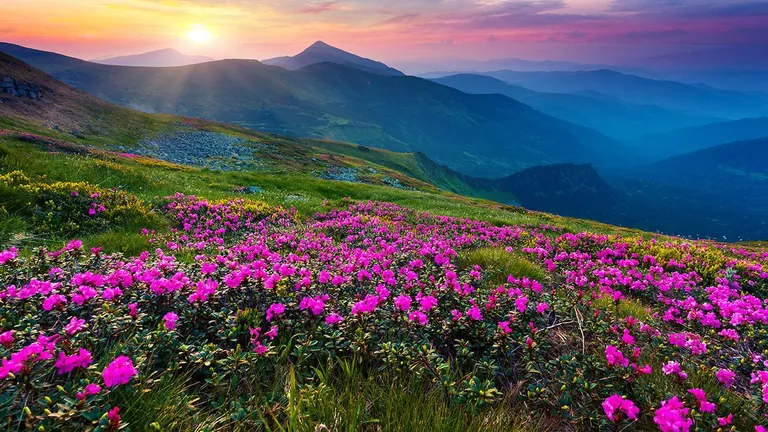
Rhododendrons of Milke Danda
A 16-day botanical walk from Basantapur to Tumlingtar along the Tinjure–Milke–Jaljale ridge in east Nepal's Koshi hills, topping out around 3,200 m on Milke Danda. Expect rhododendron forest in bloom — Rhododendron arboreum among them — and mid-hill cloud forest, not megafauna. Small group (min 4), naturalist-led, walking through Basantapur, Chauki, Gupha Pokhari, Milke Danda, and Khandbari.

Langtang Bird Trek
A walk-in birding trek through Langtang National Park, north of Kathmandu, with habitats running from riverside creeks to alpine pass. Park records list 380 bird species, ten of them globally threatened. The route names Ibisbill (Ibidorhyncha struthersii) on the Langtang Khola and crosses to Gosainkunda. Naturalist-led, locally-owned teahouses, IPPG-aligned porters.
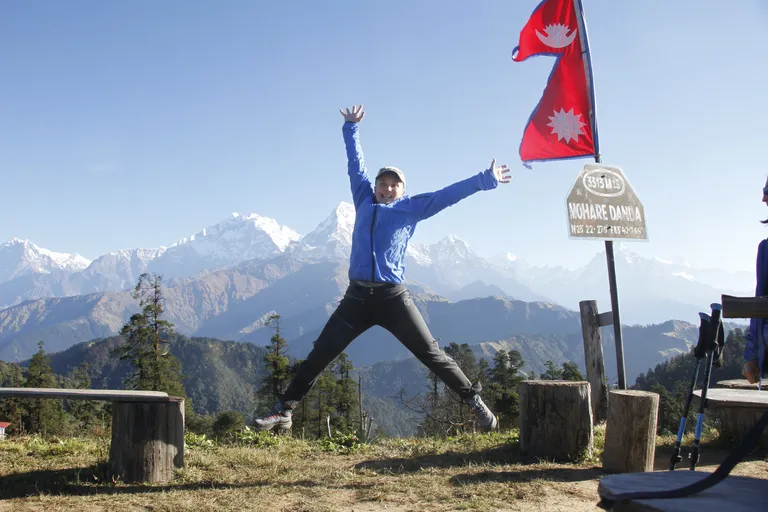
Mohare Danda Community Eco Trek
Mohare Danda is an 11-day trip from Kathmandu with six days walking through Magar villages in Myagdi, topping out at 3,300 m on Mohare Hill for an Annapurna–Dhaulagiri panorama. Expect rhododendron forest, terraced millet and buckwheat, and community-owned lodges in Bas Kharka, Nangi, Mohare, Danda Kharka, and Tikot — a quieter ridge west of Poon Hill.