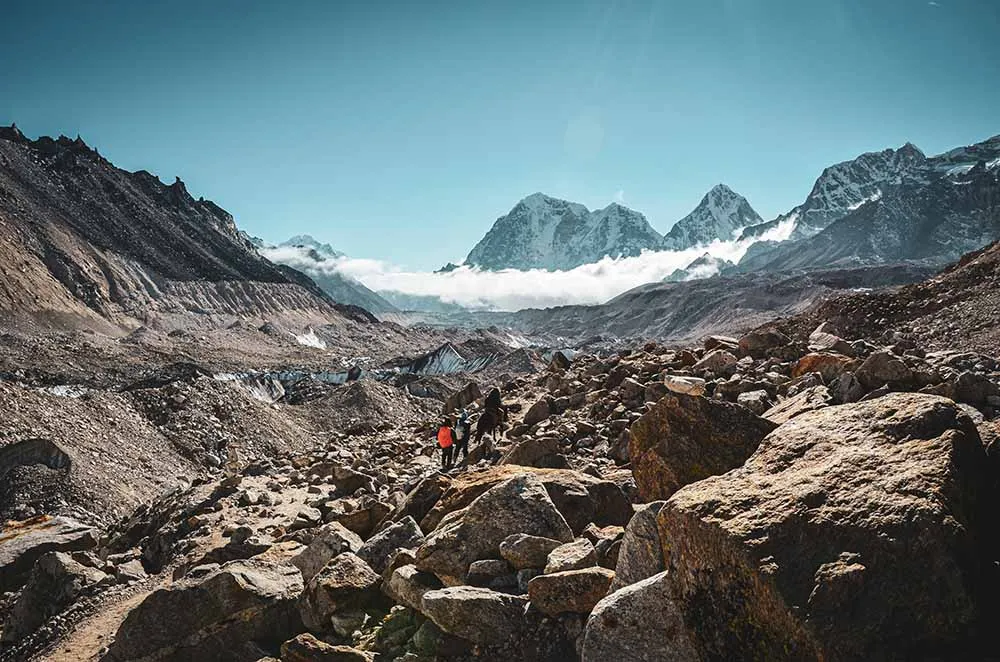
Upper Mustang Trek
A 14-day journey into Upper Mustang — the trans-Himalayan kingdom of Lo, closed to foreigners until 1992 and still a designated restricted area. Walk through eroded red and ochre canyons to Lo Manthang, the 600-year-old walled capital, with two days inside the city to explore the royal palace, three monasteries, and the surrounding Sky Caves of Mustang.
About this trek
There is a place in the Himalaya that closed itself to outsiders for forty years, and only opened in 1992. It still requires a special permit, a licensed guide, and (until very recently) a minimum of two trekkers in a group. The reason: this is the Kingdom of Lo — Upper Mustang — the last continuous functioning Tibetan-Buddhist kingdom on Earth, founded by the warrior Ame Pal in 1380, sustained for six hundred years by the salt trade between Tibet and India, and preserved through the 20th century by sheer geographic isolation. The Cultural Revolution destroyed Tibetan Buddhism inside Tibet itself; in Mustang, on the wrong side of the watershed, it never stopped.
The 14-day trek follows the old salt-trade trail north up the Kali Gandaki — the deepest river gorge on Earth, with Annapurna I (8,091 m) on one side and Dhaulagiri I (8,167 m) on the other — into a landscape that looks nothing like the rest of Nepal. Mustang sits in the rain shadow of those two 8,000-metre walls, which means it gets almost no monsoon rain. The result is an arid, eroded, trans-Himalayan desert: red, ochre, and pale-blue canyons, wind-carved cliffs, hand-irrigated barley fields, fortified white-washed villages, and chortens against a sky that is genuinely, consistently blue. The high point of the trek is around 4,000 m — moderate by Nepali standards — and the difficulty is more about long days, sustained wind, and remoteness than altitude.
The cultural heart of the trek is Lo Manthang, the walled capital. Founded in 1380, it has barely changed in appearance since: a single-entrance walled city of mud-brick and rammed-earth buildings, with a five-storey royal palace at the centre, three major monasteries (Jampa, Thubchen, and Chodey), and the residence of the King of Lo — Jigme Singhi Palbar Bista, the 26th in his lineage. The Nepalese government formally abolished the monarchy in 2008 and his father (the last officially recognised king) died in 2016, but culturally and spiritually, the family is still the centre of Loba life. Every May, the city hosts the three-day Tiji Festival — masked monks, ceremonial dances, prayers for the world, and the king as guest of honour. We schedule a dedicated departure around it (May 13–15, 2026 are the next festival dates).
We've been operating Upper Mustang since the trail opened in 1992. Our founder, Vimal Thapa, has personally led 20+ trips into Lo and we work directly with families in Lo Manthang — including one of the families that hosts trekkers in homes inside the walled city itself. Two important developments shape any 2026/2027 booking: the Nepalese government dramatically reformed the permit system in March 2026 (now USD $50/day pay-as-you-go, replacing the old $500/10-day flat fee), and solo trekkers are now permitted with a licensed guide. Both changes make Mustang significantly more flexible than it was even six months ago. We can now offer everything from a 5-day "Lo Manthang and Back" itinerary at one end to the full 14-day classic loop at the other.
Trip Facts
- Best season
- March–November — Mustang is the only major Nepal trek that stays open through monsoon (rain shadow region)
- Group size
- 1–10 trekkers
- Total distance
- ~120 km
- Avg walking
- 5–6 hours
- Start / end
- Jomsom (flight from Pokhara) → Jomsom (return flight)
- Accommodation
- 3 nights tourist hotel (Kathmandu and Pokhara); 9 nights in mountain teahouses; option for 1–2 nights homestay inside Lo Manthang
- Guides & porters
- Licensed Mustang-region guide (mandatory by law), 1 porter per 2 trekkers
- Minimum age
- 12+
Trek Highlights
- Walk into Lo Manthang, the 600-year-old walled capital of the Kingdom of Lo — a single-entrance medieval city of mud-brick palaces, three Tibetan-Buddhist monasteries, and the residence of the unofficial 26th King of Mustang
- Two full days inside the walled city to visit the Royal Palace, the three main gompas (Jampa, Thubchen, and Chodey, all dating to the 15th century), and the surrounding villages of Choser and Garphu
- Visit the Sky Caves of Mustang — over 10,000 ancient meditation caves carved into vertical red cliffs, including Konchok Ling (the "Bee-Hive" Caves) and the painted caves at Luri Gompa, dated to the 12th century
- Walk through Nepal's only trans-Himalayan desert — Mustang sits in the rain shadow of Annapurna and Dhaulagiri, producing an arid landscape of eroded canyons, ochre cliffs, and intensely blue sky
- Optional Tiji Festival departure (May 13–15, 2026) — three days of masked monk dances, ceremonial prayers, and the unofficial king as guest of honour; the major event in the Loba calendar
- Trek the deepest river gorge on Earth — the Kali Gandaki valley between Annapurna I (8,091 m) and Dhaulagiri I (8,167 m), the historic salt-trade route between Tibet and India
Day-by-Day Itinerary
Met at Tribhuvan International Airport and transferred to your hotel in Thamel. Welcome dinner with your guide; trip orientation and gear check. Accommodation: 3-star hotel in Kathmandu. Meals: Dinner.
Book a Departure
No published departures right now — get in touch and we'll set up a private date.
Upcoming Departures
Spring 2026
5 departuresCustom and private departures available year-round on request.
What's Included
- 3 nights' accommodation at 3-star tourist hotels (2 in Kathmandu, 1 in Pokhara), twin-share, B&B
- 9 nights' accommodation in mountain teahouses on the trail (twin-share)
- All meals on the trek (breakfast, lunch, dinner) — Nepali, Tibetan, and Western options
- Domestic flights: Kathmandu–Pokhara–Jomsom–Pokhara–Kathmandu
- Private vehicle transfers in Pokhara
- Licensed, English-speaking Mustang-region trekking guide (mandatory under restricted-area regulations)
- Porters (1 per 2 trekkers, 15 kg luggage allowance)
- All staff wages, meals, accommodation, insurance, and equipment
- All three trekking permits: Mustang RAP (USD $50/day, 10 days included = USD $500), ACAP (USD $30), TIMS card (USD $20)
- Permit processing — passport photos and document handling on your behalf
- Half-day guided heritage tour of Kathmandu (Day 2)
- Airport transfers in Kathmandu
- Welcome and farewell dinners
- First-aid kit, oximeter, and emergency communications carried by guide
- All applicable government taxes
Not Included
- International flights to and from Kathmandu
- Nepal entry visa (USD $50 on arrival for 30-day multi-entry)
- Travel and medical insurance with high-altitude evacuation cover (mandatory — minimum 5,000 m cover required)
- Lunches and dinners in Kathmandu and Pokhara beyond what's specified
- Drinks (bottled water, soft drinks, alcohol, tea/coffee outside meals)
- Hot showers and Wi-Fi in higher teahouses (typically USD $3–7 each, sometimes unavailable in higher villages)
- Personal trekking gear — sleeping bags and down jackets available to rent in Kathmandu
- Tips for guide and porters (customary)
- Tiji Festival surcharge (if applicable, ~USD $250)
- Costs arising from delays, evacuations, or events outside our control
- Anything not listed under "What's Included"
Frequently Asked Questions
What changed about Mustang permits in March 2026?
Two major reforms came into effect on March 22, 2026:
1. Permit fee: The old USD $500 flat fee for the first 10 days was scrapped. The new fee is USD $50/day pay-as-you-go, with no minimum stay. This means a 5-day Mustang itinerary now costs $250 in permit fees instead of the old $500 minimum.
2. Solo trekking now permitted: The previous two-person minimum group requirement was relaxed. Solo trekkers can now enter Upper Mustang with a licensed guide (the guide requirement remains mandatory). Mustang is currently the only restricted-area trek in Nepal where this applies — Manaslu still requires minimum two trekkers.
These changes followed the November 2025 reopening of the Korala border between Upper Mustang and Tibet, and are intended to make the region more accessible for shorter and more flexible itineraries.
How does Upper Mustang compare to Manaslu?
These are Nepal's two flagship restricted-area treks, and they're very different products:
If your priority is culture, festivals, and a 600-year-old walled city, Upper Mustang. If your priority is a serious physical circuit and Tibetan-border villages, Manaslu. Some trekkers do both on consecutive trips.
Why is Mustang the only Nepal trek that runs through monsoon?
Mustang sits in the rain shadow of the Annapurna and Dhaulagiri massifs. Monsoon clouds coming up from India hit those 8,000-metre walls and drop their rain on the south side. By the time the air crosses to Mustang on the north side, it's mostly dried out. Annual rainfall in Lo Manthang is around 250 mm — comparable to parts of southern Spain, not Nepal. This is why the landscape is desert-like, why the walled city has survived 600 years intact, and why Mustang is the go-to choice if you want to trek in Nepal in June, July, or August when the rest of the country is rained out.
How fit do I need to be?
Moderate fitness. The trek is at moderate altitude (high point around 4,000 m), with no genuine high-pass days like Manaslu's Larkya La. The challenges are more about long days (some 6–8 hours), sustained wind (afternoons can be ferocious), and remoteness than altitude or technicality. Reasonable hikers in good general shape do this trek without problems. We recommend 6–8 weeks of regular hill walking before the trip.
What is Lo Manthang actually like?
Smaller than people imagine. The walled city is about 300 m by 200 m — you can walk around the entire perimeter in 15 minutes. There are roughly 150 households inside the wall, three working monasteries, the royal palace at the centre, and a single main square. The architecture is Tibetan: mud-brick and rammed-earth buildings whitewashed with ochre, flat roofs piled with firewood, narrow alleys threading between them. The streets are unpaved. There is electricity (since around 2000), partial mobile coverage, and one very small hotel. The atmosphere is quiet, devout, and slightly strange — like walking into a working medieval city that time forgot.
Can I see the Sky Caves?
Yes. The Choser Sky Caves complex, 12 km north of Lo Manthang, is included in the standard itinerary as a Day 10 excursion. There are over 10,000 ancient meditation caves carved into the vertical red cliffs of the Choser valley, including the famous "Bee-Hive" formation and a number of caves still actively used by hermit monks. The Konchok Ling cave can be entered on a guided tour with a local key-keeper. The painted caves at Luri Gompa (12th-century murals) are visited separately on Day 12.
What about the king?
Nepal formally abolished the monarchy on October 7, 2008. The last officially recognised King of Mustang, Jigme Dorje Palbar Bista, died in Kathmandu on December 16, 2016, age 86. His adopted son and heir, Jigme Singhi Palbar Bista, is the unofficial 26th king — culturally and spiritually still revered by the Loba people, but not state-recognised. He lives part-time in the Lo Manthang palace and is featured in National Geographic's 2018 Mustang issue. The royal palace is partially open to visitors and the family attends major festivals including Tiji.
When should I go?
Mustang's seasons are different from the rest of Nepal:
- April–early May: peak season, clear skies, blossoming barley fields, Tiji Festival window - May–September: shoulder/monsoon season, but still excellent in Mustang (rain shadow) - October–November: peak season, clearest skies, harvest in the villages - December–February: cold but clear, many lodges close, locals migrate south
If you want the Tiji Festival, you need the May 13–15, 2026 dates specifically. If you want quietest trail with best weather, late October or early November.
What about food and accommodation?
Teahouse menus are simpler than Annapurna or Everest — fewer Western options, more local. Tibetan-style food dominates: thukpa, momos, tsampa porridge, salty butter tea. Local Mustang barley and apple products are everywhere. Lower elevations (Jomsom, Kagbeni) have more variety; Lo Manthang and the higher villages are simpler. Accommodation is in family-run teahouses — twin-share rooms, shared bathrooms, hot showers usually available for a small fee. Homestays inside the walled city of Lo Manthang are available on private departures (recommend booking 6+ months ahead).
What's the cancellation policy?
A 25% deposit confirms your booking. Full balance due 60 days before departure. Cancellations 60+ days out: full refund minus deposit. 30–59 days out: 50% refund. Less than 30 days out: no refund. Note: the Mustang RAP fee (USD $50/day) is non-refundable once permits are issued — typically 7 days before trek start. Tiji Festival departures have stricter cancellation terms due to advance hotel booking. We strongly recommend trip insurance with cancellation cover.
More treks like this
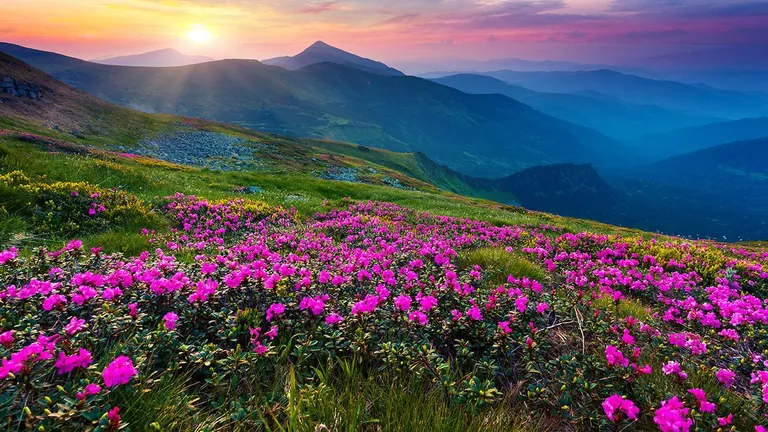
Rhododendrons of Milke Danda
A 16-day botanical walk from Basantapur to Tumlingtar along the Tinjure–Milke–Jaljale ridge in east Nepal's Koshi hills, topping out around 3,200 m on Milke Danda. Expect rhododendron forest in bloom — Rhododendron arboreum among them — and mid-hill cloud forest, not megafauna. Small group (min 4), naturalist-led, walking through Basantapur, Chauki, Gupha Pokhari, Milke Danda, and Khandbari.

Langtang Bird Trek
A walk-in birding trek through Langtang National Park, north of Kathmandu, with habitats running from riverside creeks to alpine pass. Park records list 380 bird species, ten of them globally threatened. The route names Ibisbill (Ibidorhyncha struthersii) on the Langtang Khola and crosses to Gosainkunda. Naturalist-led, locally-owned teahouses, IPPG-aligned porters.
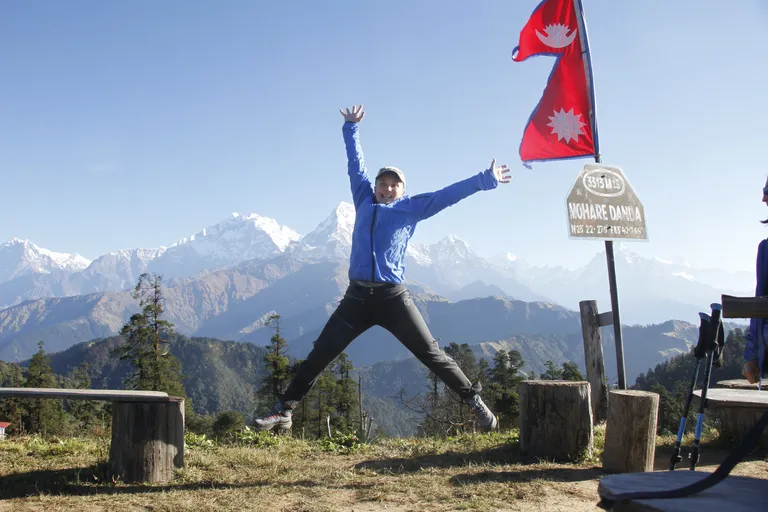
Mohare Danda Community Eco Trek
Mohare Danda is an 11-day trip from Kathmandu with six days walking through Magar villages in Myagdi, topping out at 3,300 m on Mohare Hill for an Annapurna–Dhaulagiri panorama. Expect rhododendron forest, terraced millet and buckwheat, and community-owned lodges in Bas Kharka, Nangi, Mohare, Danda Kharka, and Tikot — a quieter ridge west of Poon Hill.