
Mardi Himal Trek
A short, accessible 7-day trek to the foot of Mardi Himal (5,587 m) and a 4,500-metre viewpoint directly under Machhapuchhre's south face. Walk up through rhododendron forest, sleep on a high ridge in mountain teahouses, and stand inside the Annapurna amphitheatre — without the 12-day commitment of ABC or the altitude risk of EBC. The best short trek in Nepal.
About this trek
The Mardi Himal trail is the newest of the major Annapurna-region routes — only opened to teahouse trekking in 2012 — and it solves a problem that the older treks don't. Most short Nepal treks (Poon Hill, three days) feel light. Most "real" Annapurna treks (ABC, 12 days; Annapurna Circuit, 18) require a serious time commitment. Mardi sits exactly in between: seven days from Kathmandu, five on the trail, no flights, no restricted-area paperwork, and a high point of 4,500 m that puts you face-to-face with Machhapuchhre, Annapurna South, and Hiunchuli without the altitude risk of crossing 5,000 m.
The route runs along a single high ridge that points like a finger from the Annapurna massif south towards Pokhara. You start at Kande, 1,770 m, an hour's drive from the lake, and walk up through Gurung villages, rhododendron and oak forest, then alpine meadow to a series of progressively higher camps — Forest Camp, Low Camp, Badal Danda ("the cloud ridge"), High Camp at 3,580 m. From High Camp, a pre-dawn climb up the final ridge brings you to Mardi Himal Base Camp at 4,500 m, where the trail simply ends in a wide grassy bowl with a wall of mountains in front of you. Annapurna South sits directly across the valley. Machhapuchhre — the Fishtail — is so close you can see the snow texture on its face. Most people stand there for forty minutes saying very little.
The descent finishes through Siding and Luwang, two traditional Gurung villages built on south-facing slopes with terraced barley fields and small tea gardens. We've been operating Mardi since the trail opened in 2012, and the route is well-suited to first-time Himalayan trekkers, families with teenagers, and ABC veterans who want to come back for something shorter and quieter. There's only one trade-off worth knowing: because the trek is so accessible, peak-season High Camp can be busy. We schedule departures to avoid the worst of the crowd, and our local Annapurna guides know which teahouses serve the best dal bhat.
Trip Facts
- Best season
- March–May (spring) and September–December (autumn)
- Group size
- 2–12 trekkers
- Total distance
- ~41 km
- Avg walking
- 5–6 hours
- Start / end
- Kande (1 hour drive from Pokhara) → Siding (3 hour drive back → Pokhara)
- Accommodation
- 2 nights tourist hotel (1 Kathmandu, 1 Pokhara); 4 nights mountain teahouses, twin-share
- Guides & porters
- Licensed Annapurna-region guide, plus 1 porter per 2 trekkers
- Minimum age
- 12+
Trek Highlights
- Stand at Mardi Himal Base Camp (4,500 m / 14,763 ft) under the south face of Machhapuchhre — closer to the Fishtail than any other trek allows you to get
- Walk a single dramatic ridge from forest to alpine meadow to bare moraine — the trail climbs more than 2,700 m in three days, with views opening progressively
- Sleep at High Camp (3,580 m), perched on the edge of the ridge with Annapurna South filling the western horizon and Machhapuchhre filling the north
- Walk through traditional Gurung villages — Kande, Pothana, Siding, Luwang — with their terraced fields, slate-roofed stone houses, and small tea gardens
- Spot Himalayan wildlife — the Mardi ridge is a designated pheasant sanctuary monitored by the World Pheasant Association; you'll likely see Himalayan tahr, danphe (the national bird), and red-billed chough on the way up
Day-by-Day Itinerary
Met at Tribhuvan International Airport and transferred straight to your domestic flight (25 minutes) or tourist coach (6–7 hours) to Pokhara. We recommend the flight for short itineraries — the 25-minute mountain flight is one of the great small-aircraft views in Nepal, and gives you a full afternoon in Pokhara. Welcome dinner with your guide; trail briefing and gear check. Accommodation: 3-star hotel in Pokhara. Meals: Dinner.
Book a Departure
No published departures right now — get in touch and we'll set up a private date.
Upcoming Departures
Custom and private departures available year-round on request.
What's Included
- 1 night's accommodation at a 3-star hotel in Kathmandu (twin-share, B&B)
- 1 night's accommodation at a 3-star hotel in Pokhara (twin-share, B&B)
- 4 nights' accommodation in mountain teahouses (twin-share)
- All meals on the trek (breakfast, lunch, dinner) — Nepali, Tibetan, and Western options
- Domestic flights: Kathmandu–Pokhara–Kathmandu (one-way coach available at lower price tier)
- Private vehicle: Pokhara–Kande and Siding–Pokhara
- Licensed, English-speaking Annapurna-region trekking guide
- Porters (1 per 2 trekkers, 15 kg luggage allowance)
- All staff wages, meals, accommodation, insurance, and equipment
- All trekking permits: ACAP and TIMS card
- Airport transfers in Kathmandu
- Welcome dinner
- First-aid kit, oximeter, and emergency communications carried by guide
- All applicable government taxes
Not Included
- International flights to and from Kathmandu
- Nepal entry visa (USD $50 on arrival for 30-day multi-entry)
- Travel and medical insurance with high-altitude evacuation cover (mandatory — minimum 5,000 m cover required)
- Lunches and dinners in Kathmandu and Pokhara beyond what's specified
- Drinks (bottled water, soft drinks, alcohol, tea/coffee outside meals)
- Hot showers and Wi-Fi in higher teahouses (typically USD $2–5 each at lower elevations, often unavailable at High Camp)
- Personal trekking gear — gear list provided on booking
- Tips for guide and porters (customary; we'll advise)
- Costs arising from delays, evacuations, or events outside our control
- Anything not listed under "What's Included"
Frequently Asked Questions
How does Mardi Himal compare to Annapurna Base Camp and Poon Hill?
If you have a week, do Mardi. If you have 10–12 days and want the classic Annapurna experience, do ABC. If you have 4–5 days and a low fitness level, do Poon Hill. Many people do Mardi after doing ABC or Poon Hill on a previous trip — it's the natural Annapurna follow-on.
How fit do I need to be?
Moderate fitness — capable of walking 5–6 hours a day for five days, with a daypack of 4–5 kg, on stone-paved or dirt trail. Day 4 (climb to High Camp) and Day 5 (climb to MBC then descend to Siding, ~10 hours total) are the hardest. Reasonable hikers in good general shape do this trek without specific training. We recommend 4–6 weeks of regular hill walks before the trip if you don't hike often.
Will I get altitude sickness?
The high point of 4,500 m is just below the threshold where altitude sickness becomes common. Mild symptoms (headache, poor sleep, low appetite) are possible at High Camp and the climb to MBC. Serious altitude sickness is rare. Your guide carries a pulse oximeter and checks oxygen saturation each evening. If anyone shows symptoms, the response is descent. Important: do not attempt the climb from High Camp to MBC if you've slept badly, have a headache, or feel unwell — you can wait and try again the next day, or descend to Low Camp.
When should I go?
October and November are the peak — clearest skies, stable weather, the longest-running departures. March to May is the rhododendron flowering season, especially March and early April when the forest sections turn red and pink for two weeks. December–February is cold but the trek stays open, with snow above Low Camp from January onwards (we provide microspikes if needed). June–September is monsoon — leeches in the forest, clouds covering the peaks, slippery trail. Not recommended.
Where do we sleep?
Family-run teahouses every night on the trail. Twin-share rooms with simple beds, blankets, and shared bathrooms. Hot showers are available for a small fee at Forest Camp and Low Camp; usually unavailable at High Camp. Standards drop as you climb — High Camp is basic but functional, with thin walls and shared squat toilets. The dining rooms are warm (wood stoves), the food is consistently good, and the social scene is part of the experience.
Is the trail crowded?
Less than ABC, more than the Community Trek. Mardi was almost empty until 2018; since then, it's been the fastest-growing short trek in Nepal. October–November weekends at High Camp can mean shared rooms and dinner queues. Spring shoulder-season (mid-May, late September) is much quieter. We schedule weekday departures where possible to avoid the worst of the bottleneck.
Can children do this trek?
Yes. Mardi is one of the few Himalayan treks we'd genuinely recommend for families with kids 12+. The walking days are short, the trail is well-marked, the teahouses are welcoming to families, and the high point is below the altitude where children's altitude tolerance becomes a serious concern. Younger children (8-11) can do the trek as far as Forest Camp or Low Camp on a private departure with a customised itinerary.
What gear do I need?
Less than for ABC or EBC. The essentials: a 3-season sleeping bag (rentable in Pokhara), down jacket (rentable), worn-in trekking boots, layered base/mid/shell clothing for −5°C nights at High Camp, sun protection, a 25-30L daypack, headlamp, water bottles + purification, basic first aid. Worn-in boots are the single most important thing.
Is the optional Chitwan extension worth it?
Yes if you have the time. Chitwan is Nepal's only major lowland wildlife park — completely different ecosystem from the trek (jungle, rivers, sub-tropical), with strong chances of one-horned rhinos and an outside chance of tiger. The extension adds 3 nights and ~$650; see our standalone Mardi + Chitwan Combo product. Most trekkers we've sent there call it the highlight of the second half of their trip.
What's the cancellation policy?
A 25% deposit confirms your booking. Full balance due 60 days before departure. Cancellations 60+ days out: full refund minus deposit. 30–59 days out: 50% refund. Less than 30 days out: no refund. We strongly recommend trip insurance with cancellation cover.
More treks like this
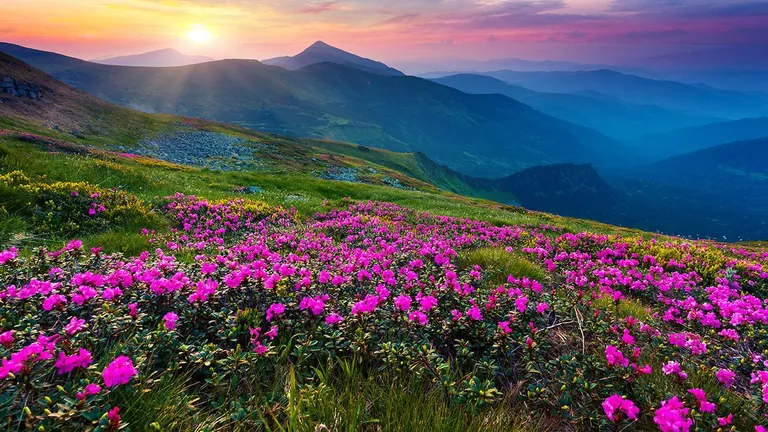
Rhododendrons of Milke Danda
A 16-day botanical walk from Basantapur to Tumlingtar along the Tinjure–Milke–Jaljale ridge in east Nepal's Koshi hills, topping out around 3,200 m on Milke Danda. Expect rhododendron forest in bloom — Rhododendron arboreum among them — and mid-hill cloud forest, not megafauna. Small group (min 4), naturalist-led, walking through Basantapur, Chauki, Gupha Pokhari, Milke Danda, and Khandbari.

Langtang Bird Trek
A walk-in birding trek through Langtang National Park, north of Kathmandu, with habitats running from riverside creeks to alpine pass. Park records list 380 bird species, ten of them globally threatened. The route names Ibisbill (Ibidorhyncha struthersii) on the Langtang Khola and crosses to Gosainkunda. Naturalist-led, locally-owned teahouses, IPPG-aligned porters.
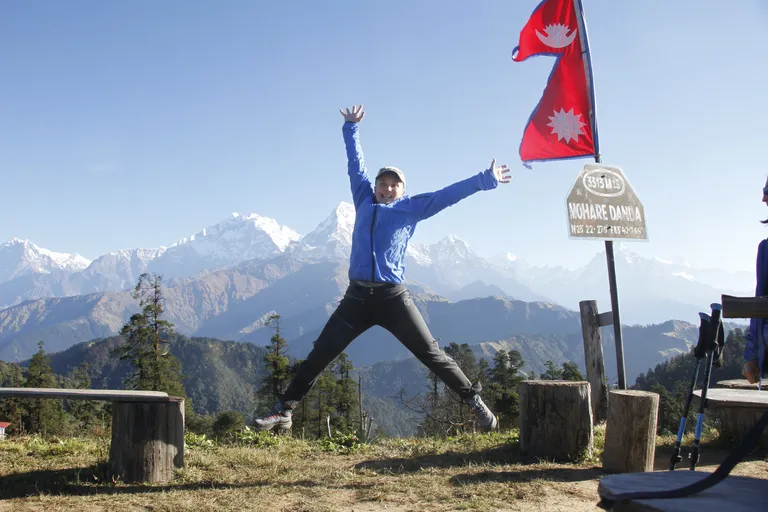
Mohare Danda Community Eco Trek
Mohare Danda is an 11-day trip from Kathmandu with six days walking through Magar villages in Myagdi, topping out at 3,300 m on Mohare Hill for an Annapurna–Dhaulagiri panorama. Expect rhododendron forest, terraced millet and buckwheat, and community-owned lodges in Bas Kharka, Nangi, Mohare, Danda Kharka, and Tikot — a quieter ridge west of Poon Hill.