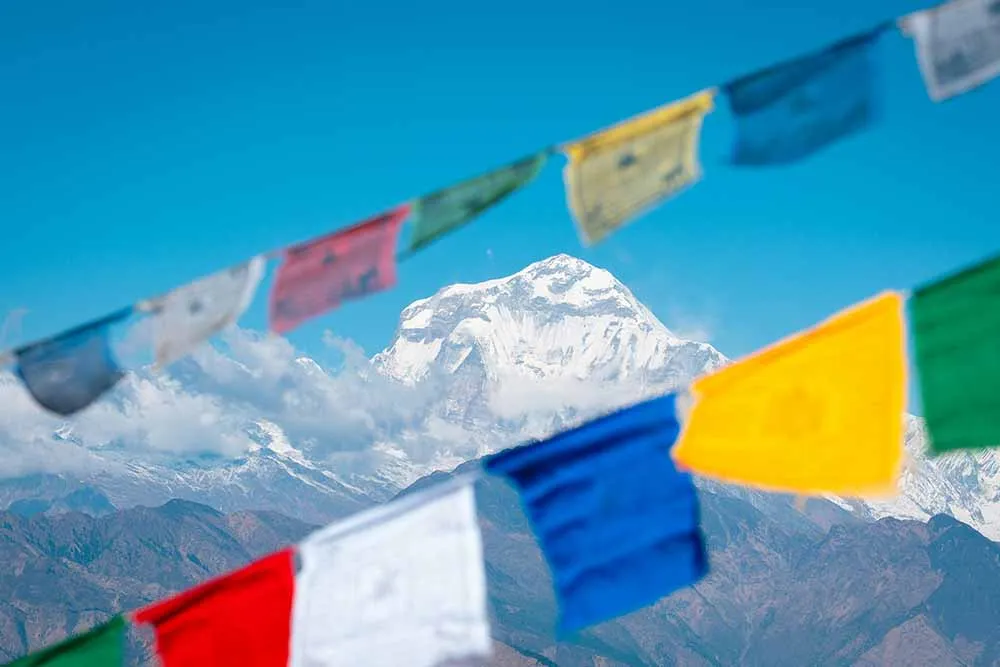
Annapurna-Dhaulagiri Community Trek
A 17-day off-the-beaten-path trek through the Magar villages of the Annapurna foothills to the panoramic ridges of Mohare Danda and Khopra (3,660 m), with an optional climb to the sacred Khayer Lake at 4,600 m. Sleep in community-owned lodges, eat food grown on the farms you walk past, and trek a trail you'll likely have to yourself.
About this trek
There's a different kind of trek in the Annapurna region — quieter, lower, and built on a different idea entirely. The Annapurna-Dhaulagiri Community Trail is Nepal's first fully community-owned trekking route. It was opened in 2010 by Mahabir Pun — the village schoolteacher from Nangi who brought wireless internet to the Himalayas and won the Ramon Magsaysay Award for it. The lodges along the trail are owned and run by the villages themselves; the profits fund local schools, health posts, and community forests. There are no chains, no foreign investors, and on most days, almost no other trekkers.
The route runs east-west along a series of high ridges between the Annapurna and Dhaulagiri massifs, deliberately staying off the heavily-walked Annapurna Base Camp and Poon Hill trails just to the south. You start in Galeshwor, west of Pokhara, and climb through stone-paved Magar villages — Banskharka, Nangi, Tikot, Swanta — before reaching Mohare Danda (3,300 m), a purpose-built ridge with one community lodge and a 360° view of 28 named peaks at sunrise. From there the trail continues to Khopra Ridge (3,660 m), perched directly under the south face of Annapurna South. An optional acclimatisation day lets you climb to Khayer Lake (4,600 m), a sacred glacial pool that locals walk to once a year on full moon. You finish by descending into the Kali Gandaki gorge — the deepest valley on Earth, with Annapurna I on one side and Dhaulagiri on the other — and out via the slate-roofed village of Paudwar to Beni and Pokhara.
The walking is moderate but real — six to seven hours a day on stone-paved village paths, through rhododendron and oak forest, past terraced barley and millet farms. The accommodation is the unusual part. Instead of standardised teahouses, you sleep in community lodges built and operated by village cooperatives. The cooks were trained in Pokhara hospitality schools as part of the project; the food on the menu is mostly what's growing in the village that month. At Nangi you'll see the organic farm that supplies the lodges, the village paper-making workshop, the secondary school, and the orange juice cooperative — all funded by what you pay for your bed.
We've been the operator for this trail since it opened. Our founder, Vimal Thapa, is one of the small group of Nepali guides who helped develop the route with Mahabir Pun and the village committees, and he still leads many of the trips personally. If you've trekked in Nepal before and want something different — or if you want your first Himalayan trek to actually do some good — this is the one.
Trip Facts
- Best season
- September–November (autumn) and March–May (spring)
- Group size
- 2–10 trekkers
- Total distance
- ~75 km
- Avg walking
- 6–7 hours
- Start / end
- Galeshwor (3-hour drive west of Pokhara)
- Accommodation
- 4 nights tourist hotel (Kathmandu / Pokhara); 12 nights community lodges and homestays, twin-share
- Guides & porters
- Licensed Magar/Gurung-region guide, plus 1 porter per 2 trekkers
- Minimum age
- 12+
Trek Highlights
- Sleep in Nepal's first community-owned mountain lodges, where every rupee you spend funds village schools, health posts, and conservation work — not foreign hotel chains
- Watch sunrise over 28 named peaks from Mohare Danda (3,300 m), a purpose-built ridge with views from Dhaulagiri (8,167 m) to Manaslu (8,163 m) — and almost no other trekkers
- Climb Khopra Ridge (3,660 m), a high natural balcony directly below Annapurna South's south face, with the optional sacred Khayer Lake hike to 4,600 m
- Walk through traditional Magar villages — Banskharka, Nangi, Tikot, Swanta — with their slate roofs, terraced fields, organic farms, and paper-making cooperatives
- Descend into the Kali Gandaki gorge, the deepest valley on Earth, between two of the world's fourteen 8,000-metre peaks
- Eat food grown on the farm you walked past — community lodges source most ingredients within 5 km, prepared by Pokhara-trained local cooks
Day-by-Day Itinerary
Met at Tribhuvan International Airport and transferred to your hotel in Thamel. Welcome dinner with your guide — go through the route, check gear, ask questions. Accommodation: 3-star hotel in Kathmandu. Meals: Dinner.
Book a Departure
No published departures right now — get in touch and we'll set up a private date.
Upcoming Departures
Custom and private departures available year-round on request.
What's Included
- 4 nights' accommodation at 3-star tourist hotels (2 in Kathmandu, 2 in Pokhara), twin-share, B&B
- 12 nights' accommodation in community lodges and homestays on the trail, twin-share
- All meals on the trail (breakfast, lunch, dinner) — locally sourced, prepared by Pokhara-trained village cooks
- Tourist coach: Kathmandu–Pokhara–Kathmandu (private vehicle available at extra cost)
- Private vehicle: Pokhara–Galeshwor (trailhead) and Tatopani–Pokhara (return)
- Licensed, English-speaking trekking guide (Magar or Gurung, local to the region)
- Porters (1 per 2 trekkers, 15 kg luggage allowance) — fair wages, full insurance, KEEP-standard load limits
- All trekking permits: ACAP (Annapurna Conservation Area Permit) and TIMS card
- Half-day guided heritage tour of Kathmandu (Day 2)
- Airport transfers in Kathmandu
- Welcome and farewell dinners
- First-aid kit, oximeter, and emergency communications carried by guide
- All applicable government taxes
Not Included
- International flights to and from Kathmandu
- Nepal entry visa (USD $50 on arrival for 30-day multi-entry)
- Travel and medical insurance with high-altitude evacuation cover (mandatory — minimum 5,000 m cover required if doing the Khayer Lake option)
- Lunches and dinners in Kathmandu and Pokhara beyond what's specified
- Drinks (bottled water, soft drinks, alcohol, tea/coffee outside meals) — note: bottled water is discouraged on this trail; bring a reusable bottle with filter or purification tablets
- Hot showers in higher community lodges (typically USD $2–4 each, paid locally)
- Optional Pokhara–Kathmandu flight if preferred over coach (~USD $130)
- Personal trekking gear — gear list provided on booking
- Tips for guide and porters (customary; we'll advise)
- Costs arising from delays, evacuations, or events outside our control
- Anything not listed under "What's Included"
Where Your Money Goes
This is the part that makes this trek different from every other Annapurna-region itinerary. The community lodges along the trail are owned and operated by Village Development Committees, not private operators. A breakdown of where the trek fees go:
- ~60% directly to villages — wages for lodge staff, cooks, porters, plus reinvestment into community infrastructure (schools, health posts, water systems, community forests)
- ~25% trek logistics — guide and porter wages, transport, food supplies the villages don't grow themselves, gear
- ~10% Nature-Treks operations — guide training, insurance, office costs in Kathmandu
- ~5% government — ACAP permits, TIMS card, applicable taxes
Specific community projects funded by the trek over the past decade include:
- The secondary school at Nangi (still running)
- The Swanta school (visited on Day 9)
- Organic farming cooperatives across four villages
- A small orange juice processing plant at Banskharka
- Wireless internet expansion (the original Mahabir Pun project)
- Community-managed forest rehabilitation across 11 villages
Frequently Asked Questions
How is this different from Annapurna Base Camp?
Different trail entirely. Different positioning, different value:
If you want to stand under Annapurna I, do ABC. If you want to walk through villages that own their own future, do this one.
Is the lower altitude a downgrade?
No — and this is worth saying clearly. The peaks you're looking at from this trek (Dhaulagiri 8,167 m, Annapurna I 8,091 m, Annapurna South 7,219 m, Machhapuchhare 6,997 m) are exactly the same peaks as on ABC and EBC. The difference is the angle and the distance. Khopra Ridge gives you a more head-on view of Annapurna South than you get from inside the Annapurna Sanctuary itself. And the lower altitude means much lower altitude-sickness risk and longer legs at the end of each day.
How fit do I need to be?
Moderate-to-good fitness. Six to seven hours of walking per day is the standard, on stone-paved village paths and forest trail. The Day 6 climb to Mohare Danda and the Day 13 descent to Paudwar are the two hardest days. The optional Day 12 Khayer Lake hike adds another level of difficulty (1,000 m altitude gain in one day) and should not be attempted by anyone feeling unwell. We recommend 6–8 weeks of regular hill walking and cardio training before the trip.
Are the community lodges comfortable?
Simple, clean, twin-share rooms with proper beds, blankets, and shared bathrooms. Hot showers usually available for a small fee at lower elevations; basic at higher ones. The dining rooms are warm (wood/yak-dung stoves), the food is excellent, and the hospitality is the unusual part — you'll often be the only group in the lodge, which means the family running it has time to talk to you. Don't expect a hotel; expect somebody's home, kept very nicely.
Will I see any other trekkers?
Some, but not many. The TripAdvisor reviewer on this trail in April reported they were the only group at most lodges. October–November sees more traffic — small Australian, German, and Israeli groups mostly — but you'll still go entire days without passing another foreign trekker. This is the trade-off: you give up the social scene of the busy trails in exchange for solitude and quiet villages.
What about the food?
This is one of the trail's surprises. Because the lodges were built as part of a single project, the cooks went through a shared training programme in Pokhara, and the food is consistently good across the route. Most ingredients are sourced from the village's own farms — fresh greens, organic dal and rice, locally-raised chicken, mountain cheese, and seasonal vegetables. Western options are available (pasta, pancakes) but the local food is what to ask for.
Can I do this trek as a family?
Yes, and a number of operators specifically market it for families with children — the moderate difficulty, low altitude, and homestay element make it well-suited. Minimum age 12 for the standard itinerary; children younger than 12 are welcome on private departures with a tailored itinerary. The Khayer Lake day is not suitable for children.
When should I go?
October and November are the peak — clearest skies, stable weather, harvest season in the villages (good time to see how community life works). March to May is the rhododendron season — the trail walls turn red and pink for two weeks in late March/early April, which is something to plan around if it interests you. December–February is cold but the lower altitude means the trail stays open year-round; some lodges close. June–September is monsoon — leeches in the forest, clouds covering the peaks. The original page lists "Early Summer" as a possible window, but in practice June is usually wet by mid-month.
Is the Khayer Lake side trip worth it?
Yes if you're fit and acclimatising well. It's the only day the trek goes properly high, and the lake itself — a small glacial pool ringed by Annapurna South, Hiunchuli, and the Annapurna Fang — is one of the most striking high-altitude places in Nepal. But it's optional precisely because the day is hard, and the rest of the trek is the real story; if you'd rather rest at Khopra, you won't have missed the trip.
What's the cancellation policy?
A 25% deposit confirms your booking. Full balance due 60 days before departure. Cancellations 60+ days out: full refund minus deposit. 30–59 days out: 50% refund. Less than 30 days out: no refund. We strongly recommend trip insurance with cancellation cover.
More treks like this
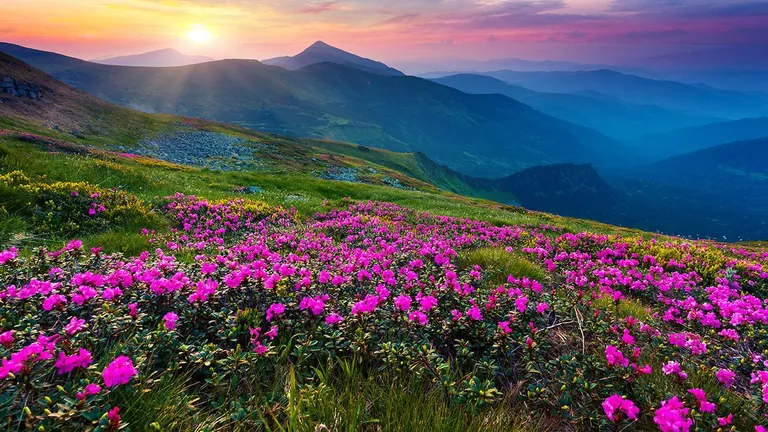
Rhododendrons of Milke Danda
A 16-day botanical walk from Basantapur to Tumlingtar along the Tinjure–Milke–Jaljale ridge in east Nepal's Koshi hills, topping out around 3,200 m on Milke Danda. Expect rhododendron forest in bloom — Rhododendron arboreum among them — and mid-hill cloud forest, not megafauna. Small group (min 4), naturalist-led, walking through Basantapur, Chauki, Gupha Pokhari, Milke Danda, and Khandbari.

Langtang Bird Trek
A walk-in birding trek through Langtang National Park, north of Kathmandu, with habitats running from riverside creeks to alpine pass. Park records list 380 bird species, ten of them globally threatened. The route names Ibisbill (Ibidorhyncha struthersii) on the Langtang Khola and crosses to Gosainkunda. Naturalist-led, locally-owned teahouses, IPPG-aligned porters.
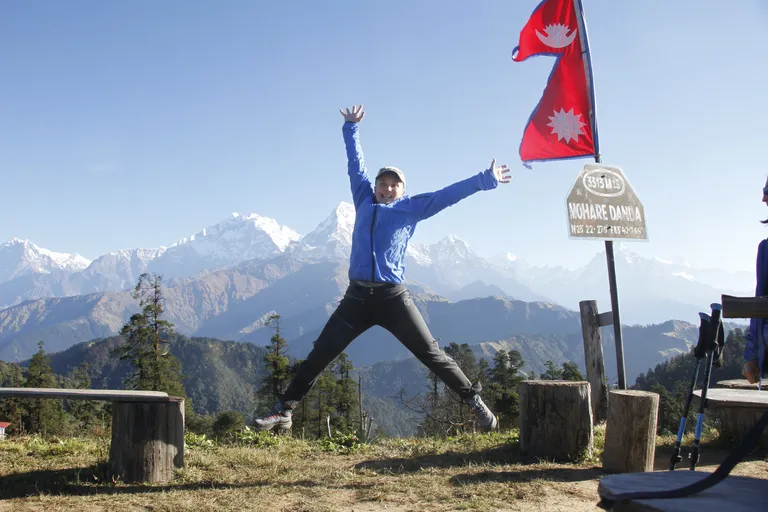
Mohare Danda Community Eco Trek
Mohare Danda is an 11-day trip from Kathmandu with six days walking through Magar villages in Myagdi, topping out at 3,300 m on Mohare Hill for an Annapurna–Dhaulagiri panorama. Expect rhododendron forest, terraced millet and buckwheat, and community-owned lodges in Bas Kharka, Nangi, Mohare, Danda Kharka, and Tikot — a quieter ridge west of Poon Hill.